SewMona

A slice of my Florida life

  • Sewing
    • SewMona on Etsy
    • Clothes
      • Boys
      • Girls
      • Men
      • Women
    • Pattern Reviews
    • How to Sew
  • Camping
    • Florida Campgrounds
  • Recipes
  • Crafts
  • DIY
  • About

How to Sew – Making a Pillow

I’m going to assume here that you have very little sewing experience.  If you need a reminder of the basics of sewing, this post is for you.  If you want to teach your kids to sew, this post might be for you.  If you’re looking for my next post with a pattern recommendation – this is not the post.  Sorry, I thought maybe I should go over some basics first.

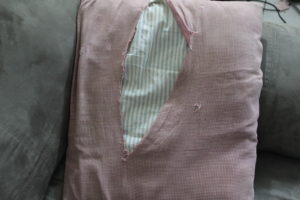
I’m not actually making a pillow; I’m just recovering one.  Maybe you have a well loved pillow that could use a new lease on its life.
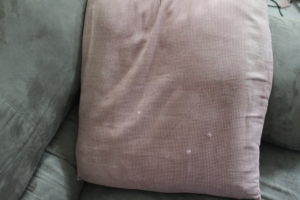
The easy part is ripping off the old pillow cover.  Then you need about 3/4 yard of fabric.  Depending on how wide it is and how big/small your pillow is, you might be able to get away with 1/2 yard.  If you want to make a new pillow, you’ll need a bag of stuffing too. If your pillow is really flat, you can fold it in half to make it fluffier.
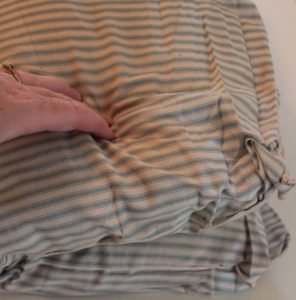
Lay your pillow out on your fabric.  Leave an inch border to allow for the seam allowance (1/2″) and a little for the puffiness of the side.
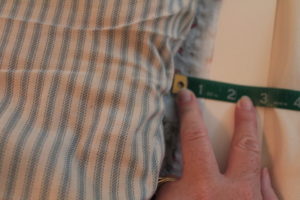
Fold the fabric over the top of the pillow and match up the edges.  Make sure that they meet with 1/2″ leftover for the seam.  Cut any extra fabric off.  You should now have a rectangle of fabric that fits nicely over your pillow.
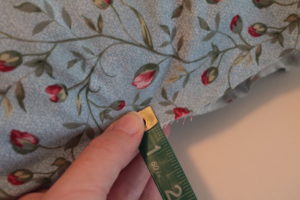
Put the pillow to the side.  Fold your fabric in half right sides together (side note – Most of the time when you’re sewing two pieces together, you’ll do it with the right sides together.  Then when you turn it right side out, you won’t see the seams).  Pin or clip the sides together.  Leave an opening on one side so you can replace the pillow.  I like to leave it in the middle of a seam.  It needs to be about 2/3 of the opening – big enough that you don’t have to fight to get the pillow back in.
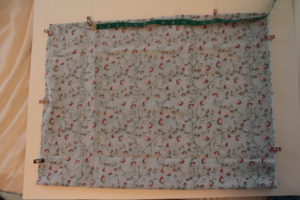
Now you’re going to sew the sides together using a 1/2″ seam allowance.  My sewing machine has markings for different seam allowances.  I measure from my needle to the lines to figure out which one was 1/2″.  Then I make sure the edge of my fabric stays on that line.
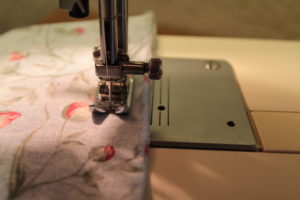
Use Marks on Your Machine for Seam Allowance

When I get to a corner, I sew to what I think is close enough so that when I turn the corner, my edge is lined up with the line.  Make sure the needle is down and lift the presser foot.
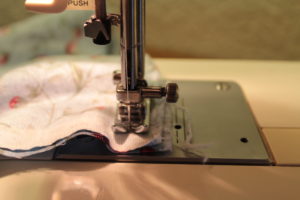
Sewing Turn Corner

Turn your material and see if the edge lines up with your line.
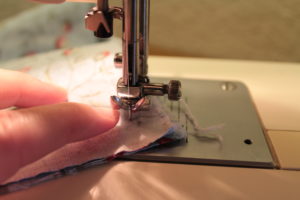
Turn the corner

In this case, it didn’t, so I turn the material back and sew another stitch or two.
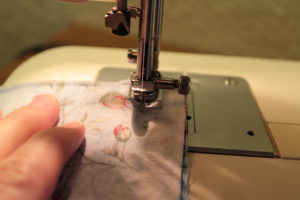
Seam isn't sewn quite far enough

Turn it again and this time it does line up.  Make sure to put the presser foot back down.  It’s just about impossible to sew with it up!  Finish sewing your edges together remembering to leave your opening for stuffing.
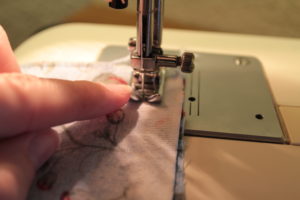
Sew another stitch then turn the corner

Every time you start or end a seam, you need to go backwards a couple stitches and then forward a couple.  So, when you start, you sew a couple stitches, then push your reverse button and go back a couple, then go forward and finish your seam.  When you reach the end (not a corner, but the very end of the seam), back up a couple stitches and go forward again.
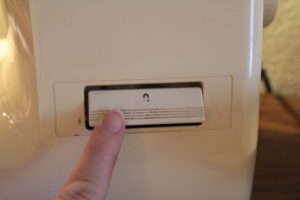
Back stitch at the beginning and end of each seam

Make sure you trim your thread ends too.
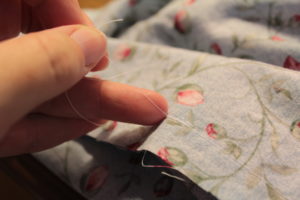
Don't forget to clip your thread ends

Turn the pillow cover right side out.
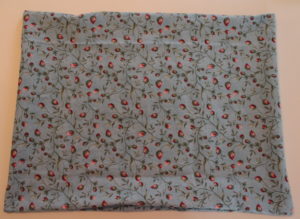
Finished pillow cover

Then comes the fun part – stuffing the pillow in.  Depending on how large or small you made the opening, it may be easier or harder.  I tend to make them as small as I can….  I folded my pillow in half to make it easier to stuff.  Once I get it in the case, I can unfold it and make it lay right.
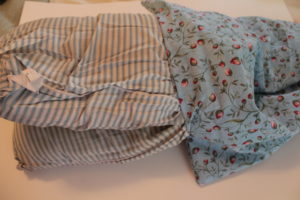
Stuff the pillow into the case

One last step – closing up the opening.  There are two choices – hand sew or machine sew.  If you’re making a fancy pillow, you probably want to hand sew it since it’s easier to hide your stitches.  I despise hand sewing and avoid it at all costs!  On a side note, I do enjoy counted cross stitch…go figure.  So, I’m going to sew this shut on my machine using thread that’s as close to matching the fabric as possible.  Turn the edges to the inside.
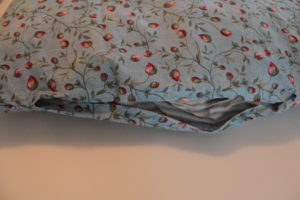
Fold seam to the inside

Then clip it closed.

Clip the seam together

It can be hard to get a pillow up close enough to your machine to sew, but to me it’s worth it to not hand sew!  This time, I want a very narrow seam, so the edge of my seam is just under the edge of the presser foot.  Go slow and make sure your seam stays together.  There’s nothing more frustrating than thinking you’re done and realizing that the bottom part slid out and didn’t get caught in the seam!
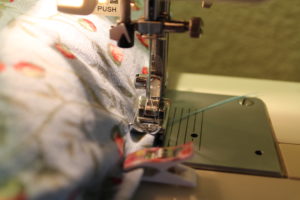
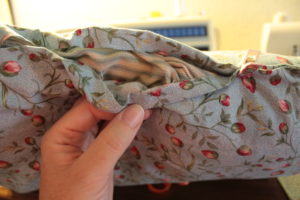
Carefully sew the opening closed

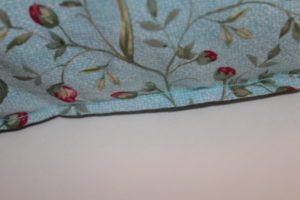
The seam will look similar to this.The finished seam

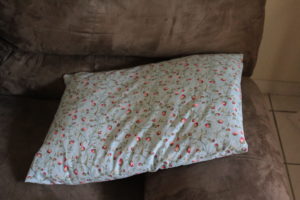
Admire your new pillow.Your new pillow is ready for use

How To Sew – Getting Started

How to Sew Getting Started

*This post contains affiliate links.

Before you can begin sewing, you will need some supplies.  Most importantly, you need a sewing machine.  If you’re just learning, don’t worry about investing in the best machine you can afford.  A basic machine is all you really need – you can always upgrade or buy additional machines (serger, coverstitch, embroidery) if you decide you really love sewing or want to have additional features available or want to start selling what you make.

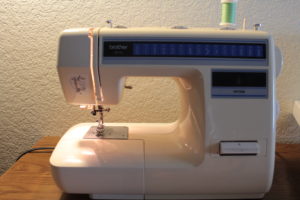
My current machine

My current sewing machine

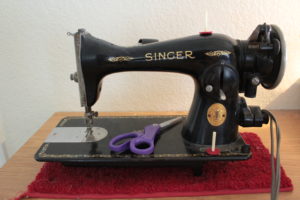
I learned to sew on this old Singer machine.

My old Singer sewing machine

Some of the older machines are better anyway, so if you have Mom’s or Grandma’s sewing machine, don’t be afraid to use it.  If you’re teaching a kid to sew, don’t – I repeat do NOT – buy a cheapie kids machine.  It needs to have a bobbin  in order for the stitches to stay and not just unravel (which is totally frustrating!).

For kids, I’ve heard good things about this one, but have never used it myself.  Check this out for more information on slowing down a “real” machine to make it safer for kids.

This is similar to my machine except mine is 20+ yrs old (I have a Brother XR-34).

You will also need a few more supplies – thread, material, a pattern (unless you’re making something like a pillow), scissors and pins or clips.  You can find them at WalMart or JoAnn (they have coupons online and an app where you can find coupons).  These shouldn’t cost more than $15 – $20.

For a free pattern, check out this post about the Chloe and Mama Chloe maxi skirts.  It’s a super easy pattern – perfect for learning.  Check back next week for more beginning sewing tips and another easy pattern recommendation.

*This post contains affiliate links.  For more information, see my disclosure policy.


Learning to Sew and Pattern Review: Chloe & Women’s Chloe

Chloe Skirt and Maxi Pattern Review

This post contains affiliate links.

Learning to sew doesn’t mean you have to make pillowcases or pillows or other items you don’t really need or want.  You can learn to sew and make something wearable and fashionable at the same time!  Are you looking for an easy pattern to learn to sew?  Or maybe you want to teach one of your kids to sew?  Are you looking for a cheap (aka free) pattern? Keep reading to see how to get an awesome deal on this trendy pattern.

I was recently able to test the Chloe and Women’s Chloe patterns by Made for Mermaids.  These are simple A-line skirts with yoga style waistbands and a choice of short or maxi length.  No elastic to mess with – just four seams.  When I saw how easy they were, I knew that it was the perfect pattern for my daughter to learn how to use my machine.  Normally she sews on her machine.

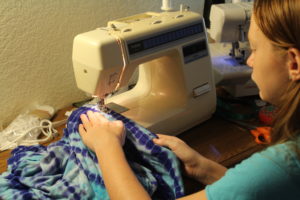
Kid Sewing, Chloe Skirt

This time though, she was able to use my machine (which has a stretch stitch) to sew herself a knit maxi.  Two long straight seams (the sides), one short straight seam (the waistband), and one seam to attach the waistband (I did help with that – stretching and sewing takes some practice although I’m sure with some guidance she could’ve done it herself).  I also did the hem – a rolled hem on my serger.

Chloe Skirt, Sewing with Kids

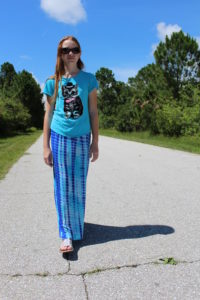
Maxis are everywhere now and they are so comfy!

Maxi Chloe

We don’t do the matching thing very much, but with something this easy & this comfy how could we not?

Matching Chloes

Matching Chloes

Short Chloe, Grace Top

Short version of the Chloe and the Grace top.

Maxis are perfect for summer weather – lightweight knits make a cool and breezy skirt while still being modest even if you’re chasing after kids!

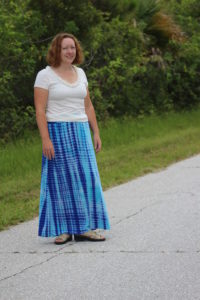
Women's Chloe maxi skirt

My version of the Women’s Chloe

Both of these patterns are free – no codes needed, no joing a Facebook group, just follow the links and “buy” the patterns!  Then come back and show me what you made.

This post contains affiliate links.  For more information see my disclosure policy.

How To Sew: Shortening 3/4 Sleeves

How to sew shorten sleeves

I’m working on a series of posts about adjusting clothing to fit.  To see all of them click here – How to Sew.

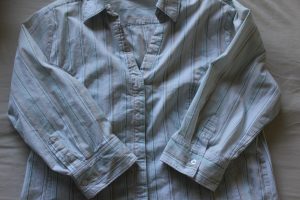
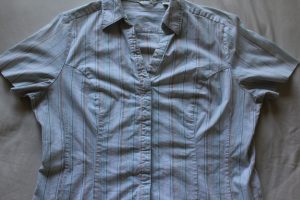
I’ve had this shirt for several years now.  I really like it, but I’ve only worn it a handful of times.  Why?  It has 3/4 length sleeves with a button cuff.  I’m not sure who thought that would be comfortable, but it isn’t!  The sleeve can’t slide up and down my arm.  No matter how I move my arm, the sleeve stays right there – half way between my elbow and my wrist.  It means the rest of the shirt pulls up whenever I reach.  I’m not into showing off my midriff and it’s just plain uncomfortable.  So, it mostly sits in my closet.  Why have I kept it?  Well, I do like the style & the print.  It’s also nice material with 3% spandex so it has a little give to it.

Button Up Shirt with 3/4 Length Sleeves

The other day, I wanted to wear it, but as soon as I put it on, I remembered why I don’t.

Button Cuff Doesn't Let Sleeve Slide

The sleeve can’t slide past my elbow. Very annoying!

Plus, now that I live in Florida, I don’t have much need for anything beyond short sleeves.  I’m not sure why I didn’t think of it sooner – I’ve shortened a lot of hubby’s dress shirt sleeves.  It’s so easy!

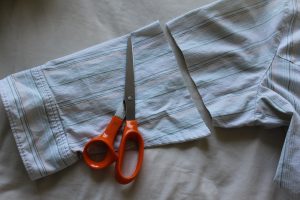
Cut the sleeve off at the desired length plus 1/2″ for the hem.Cut Sleeve Off

Using the cut-off as a pattern, cut the other sleeve to match.Cut Other Sleeve to Match

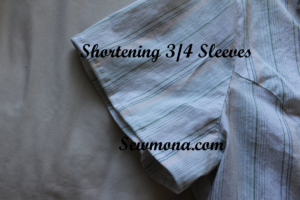
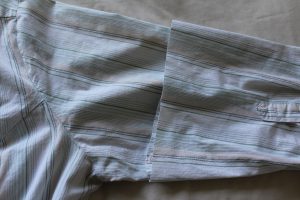
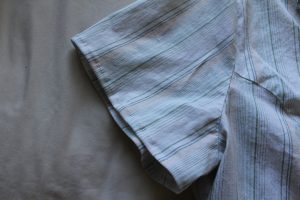
It looks better already!Sleeves Shortened

All they need is a quick hem.

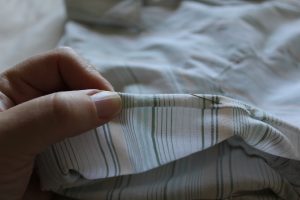
Turn under 1/4" on the sleeve edge.

Turn under 1/4″ on the sleeve edge.


Turn under another 1/4" and sew in place.

Turn under another 1/4″ and sew in place.


Finished Sleeve

My new short sleeved shirt.

My new short sleeved shirt. (and yes, I purposely told my daughter to not get my face).

Don’t forget to take the buttons off the cuffs before you toss them.  You can never have too many extra buttons!

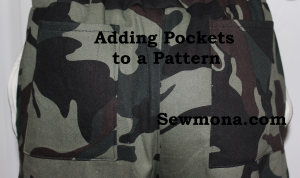
How To Sew: Adding Pockets to a Pattern

How to Sew: Adding Pockets to a Pants or Shorts Pattern

I’m working on a series of posts about adjusting clothing to fit.  To see all of them click here – How to Sew.

One of my new favorite patterns is Jasper Joggers.  They are a quick and easy sew.  The only thing “missing” is the back pockets.  There are two front pockets, but the back pockets are fakes.  That’s fine by me, but my boys wanted back pockets.

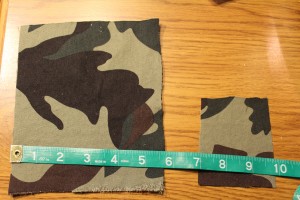
I’m adding two back pockets and a little front pocket.  I just eyeballed the size, but you could measure pockets on an existing pair of pants (or the little hands that will be using the pockets) if you’re unsure.

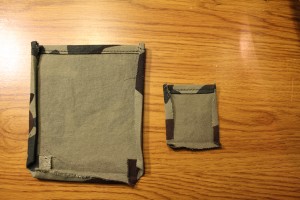
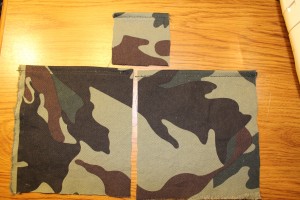
Cut Pockets the Size You Want

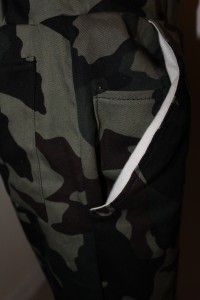
Hem the top edge of the pockets by turning down 1/4″ and then another 1/4″.

Hem the top of the pocket by doing a narrow hem.

Press 1/4″ and then another 1/4″ under on the remaining edges.  For the smaller pocket, I only turned under 1/4″ otherwise it was too hard to work with.

Press the edges of the pockets under

Three pockets ready to sew on to the pants.

Pockets all pressed and ready to sew on to pants

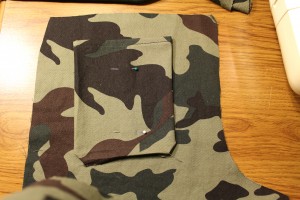
Place the little pocket where you want it positioned on the front pocket.  Don’t forget about your seam allowance (so it doesn’t end up too close to the side seam).

Place the little pocket where you want it.

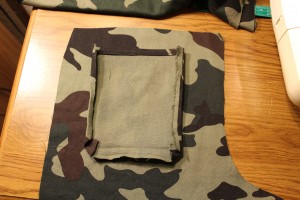
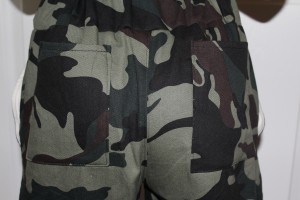
Place one back pocket where you want it – I centered mine between the top & sides.  Don’t forget about the waistband – in this pattern, you add a waistband so it will make the pockets lower.

Place one back pocket where you want it

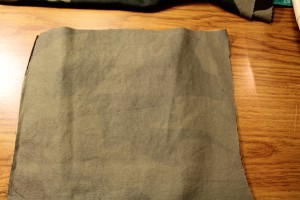
To make sure the other side matches, lay the other pocket upside down (right sides together) over the pinned pocket.

Lay the other pocked over the pinned one

Then lay the other back piece over the pocket making sure the edges line up.

Lay the other back piece over the pocket

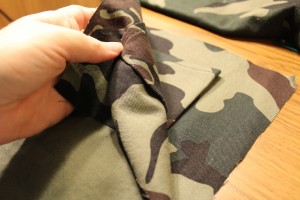
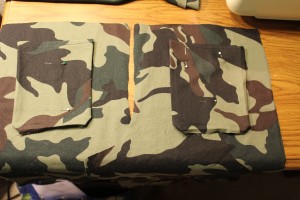
Carefully lift up one side and pin the pocket into place.  Then lift up the other side and pin it there too.  You should end up with two perfectly matched pockets.

Left up edge and pin pocket in place

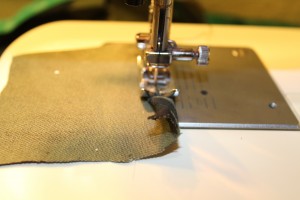
Sew the pockets in place.

Sew the pockets into place

Finish sewing the pants/shorts according to the directions.  Then find your little model and admire the pockets.

Little pocket sewn into place

Back pockets sewn into place

  • « Previous Page
  • 1
  • 2
  • 3
  • 4
  • Next Page »

Hi, I'm Mona - wife, mom, teacher, seamstress, blogger. This is my home on the web. Read More…

Categories

Copyright © 2026 · The Marianne Theme By Blogelina · Built on the Genesis Framework

Copyright © 2026 · The Marianne on Genesis Framework · WordPress · Log in